3D BIM MODELING
Transform Existing Conditions into Actionable Models
Core Capture’s 3D modeling and scan-to-BIM services provide a safe, non-invasive way to capture and visualize existing conditions with millimeter-level accuracy. Using advanced LiDAR laser scanning, we help Architecture, Engineering, and Construction (AEC) professionals streamline design, detect potential conflicts early, and reduce costly rework or downtime.
Our BIM models are built from precise as-built data and tailored to your project’s needs—empowering architects, engineers, and contractors to make informed decisions from day one. Whether it’s for space planning, prefabrication, clash detection, or facility renovations, our modeling services bring clarity and confidence to every stage of the project lifecycle.
Laser scanning is the foundation of effective BIM—and at Core Capture, we turn high-accuracy scans into intelligent models that move your project forward.
What’s the Difference Between a Point Cloud and a BIM Model?
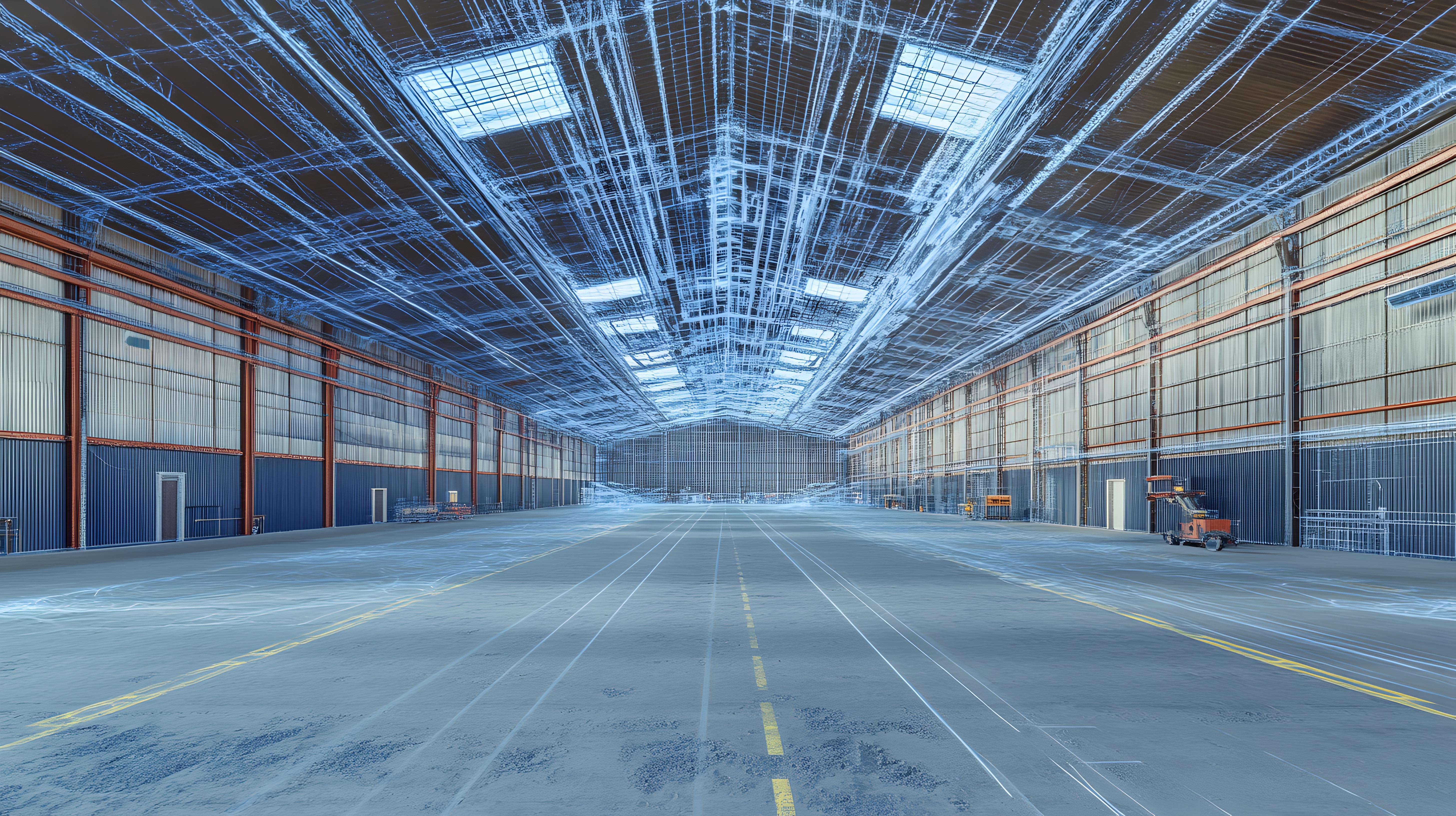
A point cloud is a dense set of 3D data points captured by laser scanning equipment, representing the physical geometry of a space. While point clouds provide raw visual reference data, they are not intelligent or editable in the way a BIM model is. A BIM (Building Information Model) is a digital replica of a space created from that point cloud—containing structured geometry, metadata, and smart components like walls, doors, and equipment. At Structra, we convert point clouds into detailed 3D BIM models tailored to your project’s needs, making it easier to analyze, design, and coordinate.
How Can a BIM Model Help My Project?
A BIM model allows all project stakeholders—from architects and engineers to contractors and facility managers—to collaborate around a single source of truth. With a detailed, intelligent model of the existing space, teams can better visualize constraints, plan modifications, detect clashes, and reduce design errors early. This leads to fewer RFIs, change orders, and delays in the field. Whether you’re working on a renovation, expansion, or facility management project, BIM modeling offers long-term value through improved coordination, accuracy, and decision-making.
What Level of Detail (LOD) Can You Provide?
We can deliver BIM models at a range of LODs depending on the scope of your project. For most renovation, design, and coordination workflows, we typically provide LOD 200–300—offering accurate representations of building elements like structure, MEP, and architectural components. Higher LODs with more granular detail (such as LOD 350–400) can be produced upon request for projects that require fabrication-level modeling. We’ll always align the model’s detail with your use case to avoid unnecessary complexity or cost.
Can You Model Only Specific Areas or Systems?
Yes — our BIM modeling services are fully customizable. Whether you need the entire building modeled or just specific areas (like mechanical rooms, roofs, or tenant spaces), we’ll tailor our work to your priorities. We can also isolate particular systems—such as structural, MEP, or architectural elements—depending on your project goals. This flexibility helps you control costs and receive exactly the level of detail and coverage needed for your application.
What File Formats Do You Deliver BIM Models In?
Core Capture delivers BIM models in the formats that best suit your team and workflows. Most commonly, we provide models in Autodesk Revit (.RVT), but we can also export to other industry-standard formats such as IFC for open BIM compatibility. If your team requires additional formats for downstream use in software like Navisworks, AutoCAD, or ArchiCAD, we’ll coordinate with you to ensure seamless integration into your design or construction environment.
